
China poses a generational threat to the United States and the US-backed international order. And Beijing sees the dawn of an AI era as an opportunity to overtake the United States. Last spring, Xi Jinping underscored as much by noting to the CCP Central Committee that artificial intelligence is a “strategic technology that is leading a new round of scientific and technological revolution and industrial transformation.” America may lead China in advanced semiconductors and AI algorithms. But those strengths alone will not confer geopolitical leadership. The United States also needs to keep pace in terms of AI infrastructure, including data centers. Doing so will require not only capital and technology investment but also overcoming severe labor challenges.
The United States needs the workforce for data center construction. Just as is the case in shipbuilding, solving this challenge is a national security task. If the US were China, this would be a problem for government to address. But in the market-led American economy, true resolution demands new pushes from the private sector, namely downstream tech champions. And a recent investment into skilled trades by Meta — in partnership with Associated Builders and Contractors and the National Urban League — suggests that it is providing precisely that.
Today’s geopolitical contest with China isn’t an innovation race. It’s also not an outright kinetic war. But it is very much a fight – if that may largely play out in peacetime. Prevailing against a pugilistic adversary in this context will require new muscles: Collaboration across public and private sectors; offensive efforts to continue to out-innovate Beijing in key domains, like the AI semiconductor and algorithmic domains where American currently leads; and corresponding defensive efforts to protect US-developed advances from theft and manipulation.
That may sound like the stuff of software bits and Silicon Valley boardrooms. But the heart of the competition is at the upstream, in the reality of physical goods and systems. AI compute capacity depends on manufacturing and infrastructure. Building out that infrastructure requires component supply chains, energy, and human capital. These are all areas where China has natural and enduring strengths.
And the United States has real weaknesses. For example, projections suggest that America’s AI infrastructure efforts will require 500,000 new electricians – a trade already in short supply.
Administration after administration has tried to resolve the skilled trade jobs gap. So has the legislature. But policy interventions only work if they are tethered to downstream demand. Tools and skills are only useful if they are aligned with job requirements and hiring opportunities. America’s hyperscalers are one of the few pillars of US society with the institutional capacity, capital, and convening authority to make a difference.
And this isn’t a hypothetical scenario. A recent announcement from Meta registers as a compelling example of exactly that.
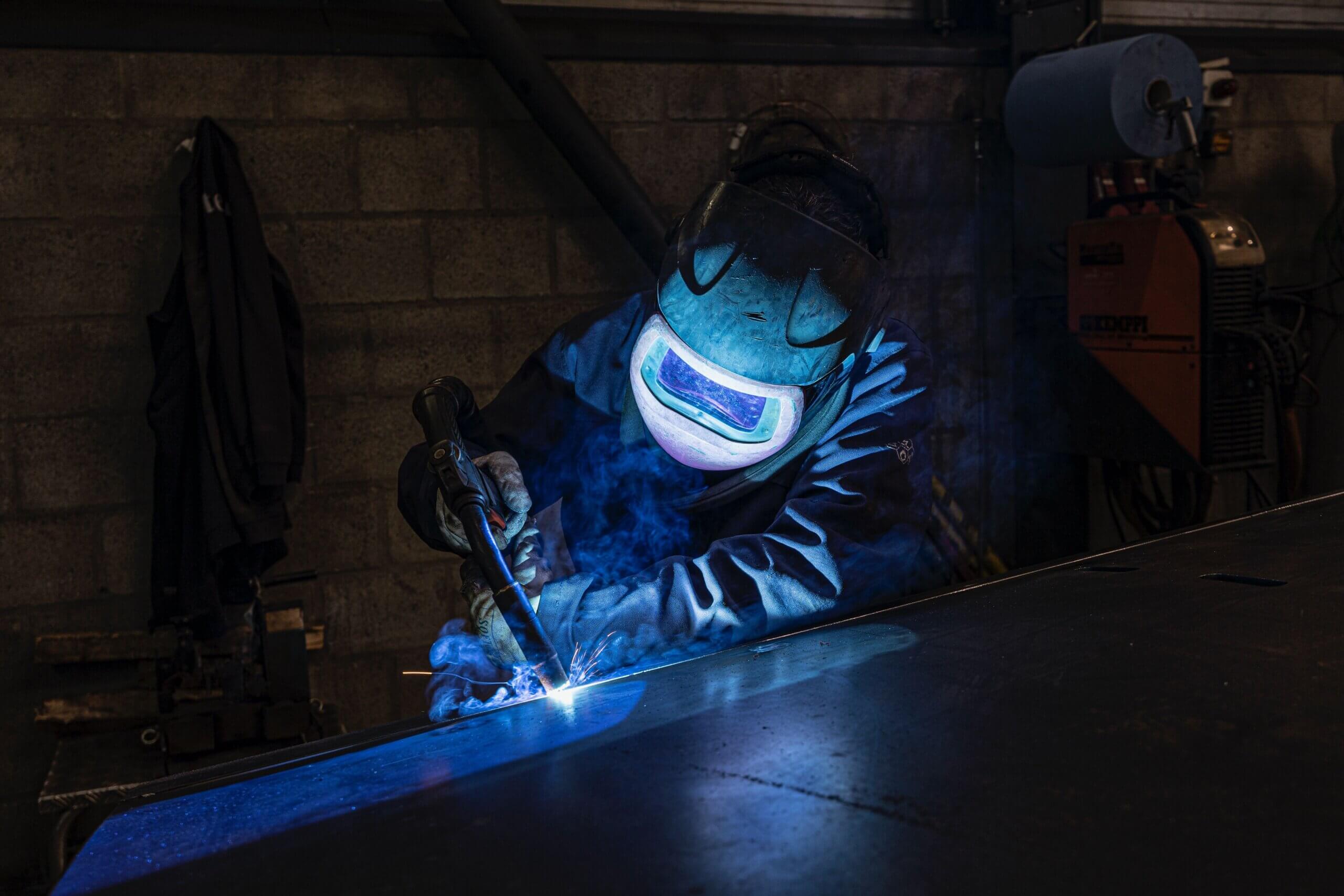
Meta, in concert with Associated Builders and Contractors and the National Urban League, recently launched the America’s Workforce Academy, a new skilled trades training effort. The program is starting in five American cities and focusing on providing participants with a “job-ready foundation for entry-level roles such as craft helper, electrical helper, fiber technician trainee, low-voltage support, or general construction labor.” This appears to be a holistic approach to a critical labor challenge holding back AI infrastructure. And Meta’s effort is receiving serious backing — to the tune of an initial commitment of $115 million.
Beyond those direct metrics, though, this push demonstrates something far more strategic. It is an explicit elevation of the technological and national security stakes of America’s labor challenge and AI infrastructure buildout. And the newly launched Academy moves beyond simply admiring that problem. It’s a real step toward a solution: a new model for private sector coordination and resolution; one that vertically integrates the best of America’s enduring strengths – skilled labor and dynamic enterprise.
Meta’s President Dina Powell McCormick and Mike Rowe, of the mikeroweWORKS Foundation, wrote bluntly in a Wall Street Journal op-ed announcing the initiative that “there is no lack of Americans eager to learn and work.” They’re right. It’s encouraging that they’re putting their money – and hiring influence – into the fight.
It should inspire confidence from the broader market and spur similar contributions from the rest of America’s big tech. China is not sitting by idly. And this clarion call should help to make clear to broader American society that it’s time to get to work.
– Emily de la Bruyère and Nathan Picarsic, Senior Fellows at the Foundation for Defense of Democracies and co-founders of Horizon Advisory
(Photo by Rik Schots/Pexels)

